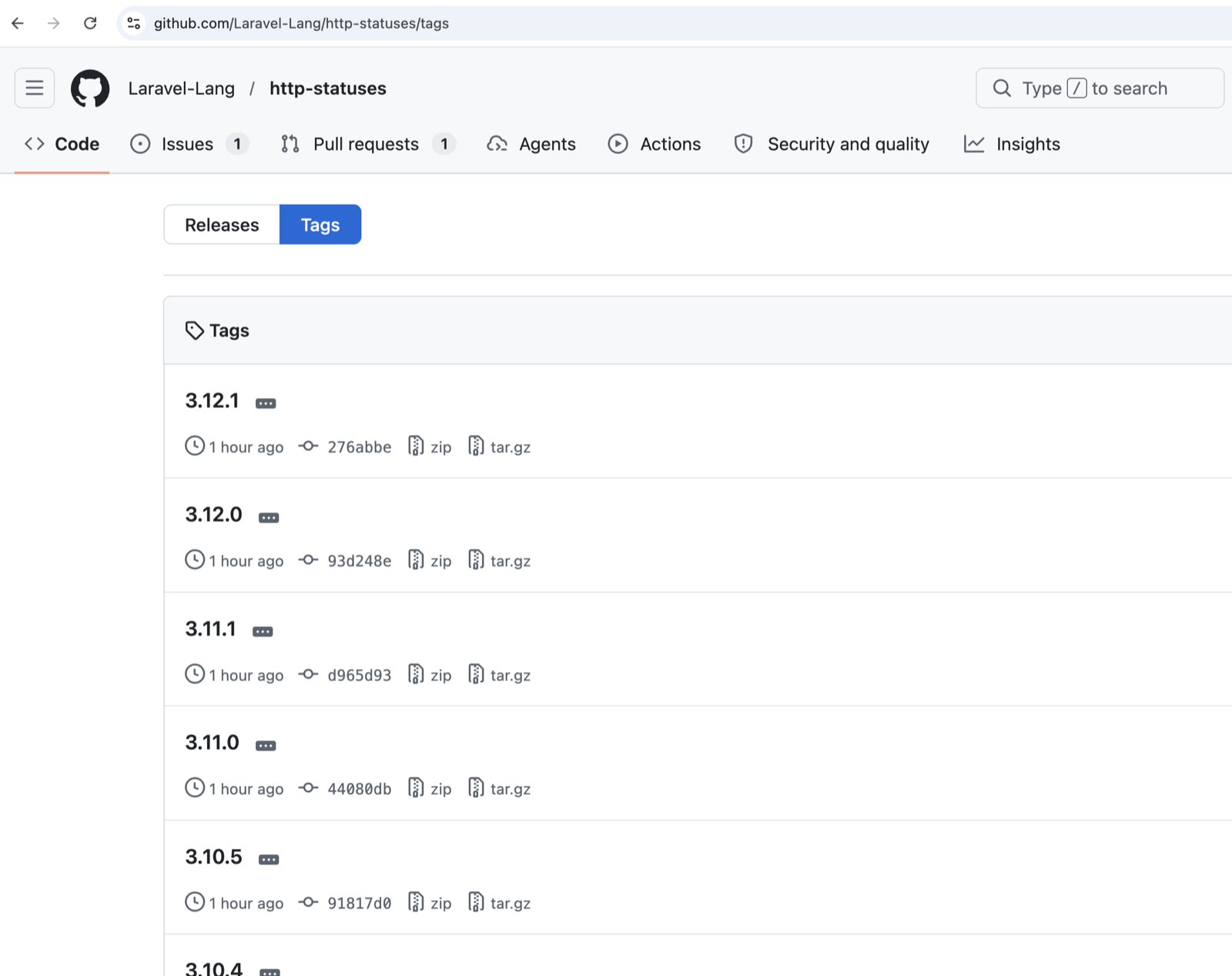
The popular Laravel-Lang package ecosystem has suffered a massive supply-chain intrusion. Interestingly, the adversary eschewed traditional codebase poisoning within primary repositories. Instead, the threat actor surreptitiously manipulated historical release tags to achieve infiltration. Consequently, these contaminated versions perfectly mimicked legitimate updates and initialized automatically during application execution.
Detailed Scope of the Package Contamination
Security researchers at Aikido, Step Security, and Snyk isolated the attack vector on May 22, 2026. The compromise directly impacted several widely deployed localization libraries published via Packagist. Specifically, the breach contaminated the laravel-lang/lang, laravel-lang/http-statuses, laravel-lang/actions, and laravel-lang/attributes repositories. Developers routinely employ these assets to manage translation arrays and validation text. Furthermore, Snyk’s updated intelligence suggests the infection spans over 700 distinct historical versions.
Mechanics of the Tag-Spoofing Vulnerability
The adversary exploited a unique synchronization behavior between GitHub and the Packagist registry. Specifically, release tags were successfully decoupled to point toward an external, malicious fork. The falsified iterations introduced a rogue script located at src/helpers.php. Subsequently, the attacker injected this file into the Composer engine configuration using the autoload.files parameter. As a result, the system automatically executed the payload whenever it invoked the core vendor/autoload.php routine.
Two-Stage Execution and Comprehensive Telemetry Exfiltration
The initial component established communication pathways with the domain flipboxstudio[.]info. Then, it silently fetched a robust second-stage implant to operate in the background. This subsequent payload immediately harvested environment variables and continuous integration secrets. Moreover, it systematically scraped cloud access profiles for AWS, GCP, Azure, and Kubernetes architectures. The software also captured Vault storage contents, local SSH credentials, and plaintext .env files. Concurrently, it exfiltrated authentication tokens for Slack, Discord, Telegram, and browser password managers. Finally, the malware initiated anti-forensic protocols to erase its file remnants from disk.
Emergency Remediation Playbook for Administrators
Packagist quickly decommissioned the contaminated versions and temporarily quarantined the affected package index. Therefore, engineering teams utilizing Laravel-Lang post-May 22, 2026, must initiate forensic auditing. Administrators should thoroughly analyze composer.lock records and scan the vendor/laravel-lang directory for src/helpers.php. Additionally, defense teams must look for network traffic targeting flipboxstudio[.]info or anomalous .laravel_locale directories. Ultimately, if an infection is verified, administrators must assume total compromise of all local parameters. Consequently, organizations must immediately invalidate and rotate every accessible key, token, and password.
Support Our Threat Intelligence
If you find our technology report and cybersecurity news helpful, consider supporting our work.
 Buy Me a Coffee
PayPal
Buy Me a Coffee
PayPal