Every Android smartphone includes a built-in debugging feature for developers. Surprisingly, cybercriminals recently hijacked this specific function. Consequently, they transformed it into a powerful tool for complete device takeover.
The Evolution of RedHook
This alarming threat involves the RedHook Android trojan. Security experts initially documented this malware back in July 2025. However, the latest iteration boasts a remarkably sophisticated and unprecedented capability.
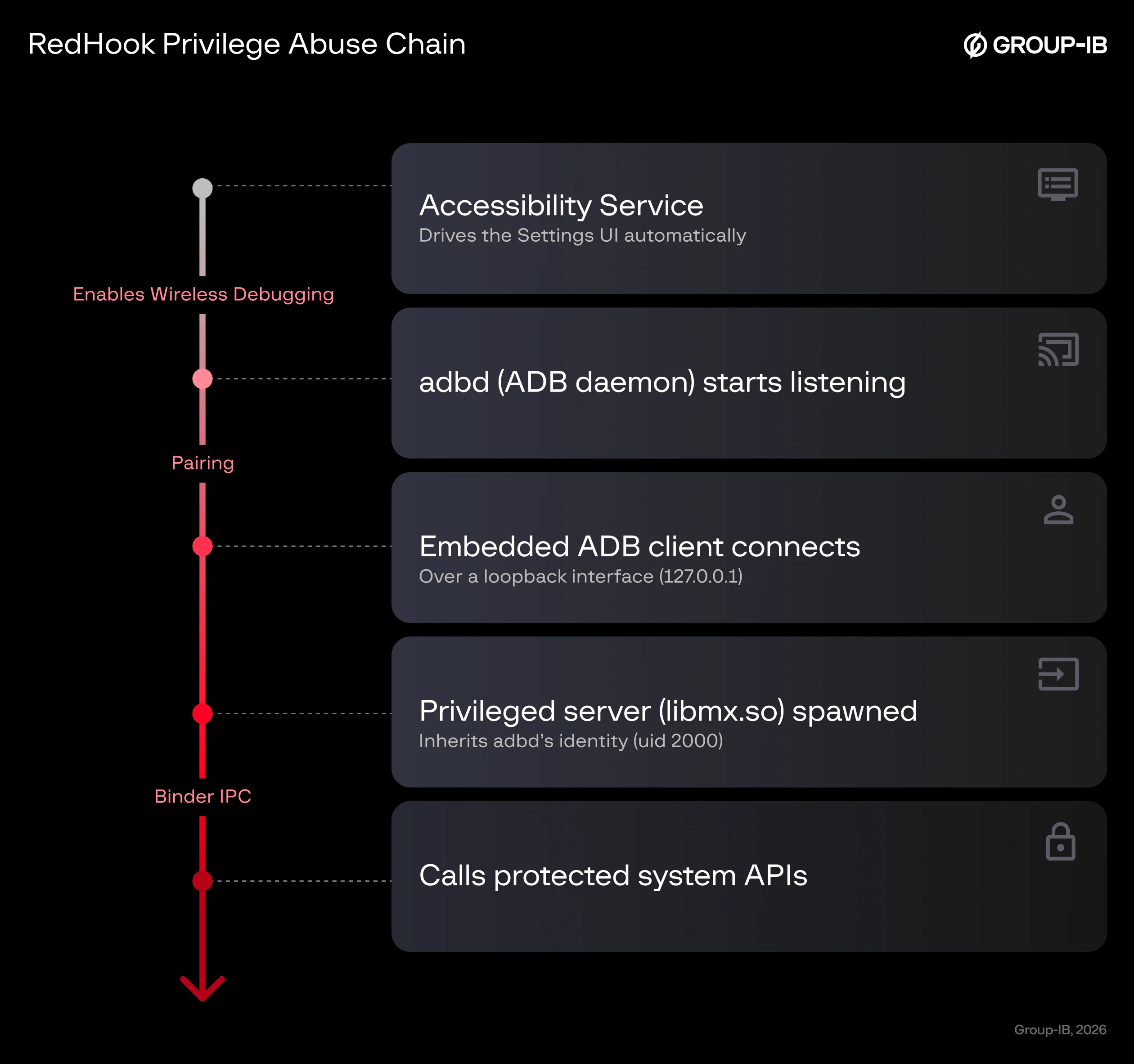
According to the upgraded RedHook Android RAT report, this malware independently activates wireless ADB debugging. Furthermore, it leverages this access to secure system-shell privileges. The trojan achieves this entirely without root access or any victim interaction.
The Deceptive Infection Chain
The infection process follows a highly classical and deceptive pattern. First, scammers contact the target via popular messaging applications. They typically impersonate bank representatives or legitimate government officials. Next, they persuade the victim to install an application from a fraudulent website.
Interestingly, the actual malicious APK files reside on perfectly legitimate platforms. Criminals host them on GitHub repositories and Amazon S3 cloud storage. Thus, they successfully evade standard security system detections.
Exploiting Accessibility Services
Following the installation, attackers coax the victim into granting Accessibility permissions. They falsely claim this step ensures optimal application performance. Ultimately, this specific permission serves as the master key.
Upon acquiring Accessibility rights, the trojan operates completely autonomously. It secretly navigates through the phone’s internal settings menu. Then, it taps the build number exactly seven times to unlock developer options. Finally, it seamlessly enables the wireless debugging feature.
Silent Privilege Escalation
Usually, a deceptive full-screen overlay hides these malicious manipulations from the victim. Next, the malware launches its own internal ADB client directly on the device. This client connects to the local debugging server without requiring a computer.
Notably, this complex mechanism relies heavily on the open-source Shizuku tool. Advanced users normally employ Shizuku to expand application privileges safely.
Total System Domination
Armed with system-level privileges, the RedHook Android trojan acts with impunity. It can covertly install or delete various software applications. Moreover, it alters protected system settings effortlessly. It even grants itself additional permissions without prompting the user.
To maintain long-term persistence, the malware utilizes several clever evasion techniques. It actively simulates an active screen window to appear normal. Additionally, it plays completely silent audio tracks continuously in the background.
Evading Detection and Removal
Furthermore, the trojan prevents the internal processor from entering sleep mode. It also stops the operating system from terminating its process during memory shortages. Two distinct internal services constantly monitor and restart each other if stopped.
Upon device reboot, a separate component automatically reinstates all previous privileges. Meanwhile, the malware transmits stolen data and live screen video to external servers. It uses a highly secure, encrypted network connection for this theft.
Targeted Regions and Protection
Since the trojan possesses system rights, it bypasses standard screen-recording permission prompts entirely. Currently, these sophisticated attacks remain heavily concentrated within Southeast Asia. Authorities initially recorded widespread infections across Vietnam. Later, the malware rapidly spread throughout Indonesia.
Users must strictly install applications exclusively from official digital storefronts. Furthermore, you should treat unknown software sources with extreme caution. Always scrutinize requested permissions carefully before granting access. Finally, react with immense suspicion if an app demands Accessibility privileges.
Support Our Threat Intelligence
If you find our technology report and cybersecurity news helpful, consider supporting our work.
 Buy Me a Coffee
PayPal
Buy Me a Coffee
PayPal