During a recent digital broadcast hosted on the Xbox Game Dev channel, Microsoft offered a retrospective of the GDC 2026 conference held in San Francisco. The presentation illuminated the latest evolutionary strides in development tools and technological updates within the Xbox ecosystem, most notably unveiling concrete specifications for the next-generation Xbox console, currently designated by the codename “Project Helix.” Furthermore, Microsoft articulated a vision to integrate an “Xbox Mode” into the Windows 11 operating system, effectively redefining the “Play Anywhere” cross-platform experience.
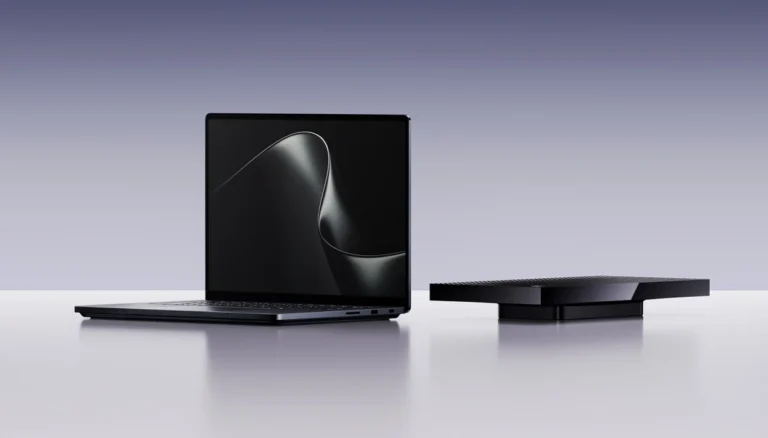
While the physical aesthetic of the “Project Helix” development kit remains veiled, Microsoft indicated that Alpha iterations are slated for distribution to game studios in early 2027, suggesting a commercial debut for the console as early as the latter half of that year. Following industry precedent, these early Devkits will provide studios with the preliminary core architecture and anticipated computational throughput required to commence engine adaptation and asset construction for the next generation of interactive entertainment.
The design philosophy underpinning “Project Helix” continues the strategic alliance with AMD, utilizing a bespoke silicon solution co-designed for the next iteration of DirectX. The console’s primary objective is to dissolve the boundaries between dedicated consoles and personal computers, featuring native support for Path Tracing and the capability to run both Xbox and PC titles seamlessly.
In terms of hardware prowess, “Project Helix” is engineered to deliver ray tracing performance an entire order of magnitude beyond the current Xbox Series X|S. It introduces a GPU-driven Work Graph execution model, which mitigates CPU bottlenecks by allowing the GPU to generate its own workloads autonomously. This facilitates the real-time simulation of expansive, complex environments and sophisticated geometry generation.
To transcend traditional rendering limitations, Microsoft has integrated Neural-assisted rendering and deep synthesis with a new version of AMD FSR, enhancing AI upscaling, frame generation, and ray reconstruction. To manage the burgeoning size of modern textures, the system adopts Deep Texture Compression and the open-source Zstandard algorithm, enabling efficient direct streaming of assets from the SSD.
Concurrently, Microsoft announced the April rollout of “Xbox Mode” for Windows 11 in select markets—a response to the proliferation of Windows-based handheld devices like the ASUS ROG Ally. This feature allows users to transition their laptops or desktops into an immersive, console-like fullscreen interface with a single click. This mode centralizes the user’s library—aggregating Xbox, PC Game Pass, and Cloud Gaming titles—while seamlessly launching games installed from external storefronts like Steam or the Epic Games Store.
Furthermore, the “Advanced Shader Delivery” system, previously exclusive to handhelds, will be extended across the PC platform. By pre-compiling shaders via the storefront and downloading them locally, Microsoft aims to eliminate the traditional “compilation progress bar” that frequently delays initial gameplay.
For the development community, Microsoft has drastically reduced environment setup times from weeks to under thirty minutes through modular design and automated licensing. The Game Development Kit (GDK) and associated documentation are now public, accessible via terminal commands and liberated from restrictive Non-Disclosure Agreements (NDAs).
Marking its tenth anniversary, DirectX 12 has received a substantial update, incorporating direct support for Machine Learning (ML) through linear algebra acceleration and the novel DirectX Compute Graph Compiler. Additionally, DirectStorage 1.4 now utilizes the Zstandard format alongside the new GAC (Game Asset Conditioning) library, potentially reducing game data footprints by up to 50% without compromising visual fidelity.
Microsoft also introduced “Foundation Mode” for PlayFab, offering seven core cloud services—including cross-platform saves, matchmaking, and leaderboards—to Xbox developers free of charge and without a mandatory Azure subscription.
Finally, Microsoft clarified the modern definition of “Xbox Play Anywhere.” Beyond the “buy once, play anywhere” ethos, it now emphasizes seamless cross-platform progression and a unified licensing experience. Currently, over 1,500 titles support this feature, which has been shown to double player engagement and purchase intent. To assist developers in fostering deeper community connections, the Xbox Store now includes tools for simplified wishlisting, a dedicated Game Preview channel, and “Targeted Offers” managed via a new, intuitive “Offer Wallet.”
Support Our Threat Intelligence
If you find our technology report and cybersecurity news helpful, consider supporting our work.
 Buy Me a Coffee
PayPal
Buy Me a Coffee
PayPal