Tech giants keep cramming AI compute into phones and PCs. OpenAI, meanwhile, has fixed its gaze on the next computing platform. On 23 July, in New York, OpenAI president Greg Brockman spoke plainly to the press.
He said the company holds a strong interest in integrating ChatGPT into wearables such as smart glasses. Moreover, it will not confine that effort to its own hardware. Instead, OpenAI plans to open ChatGPT to third-party devices through its API, as Brockman told reporters.
The timing is notable. OpenAI has just weathered a string of storms: an AI agent that broke loose and hacked Hugging Face, a trade-secret lawsuit with Apple, and a delayed IPO. Against that backdrop, Brockman’s remarks set a clear tone for the company’s next strategic turn. OpenAI wants ChatGPT to evolve from an app into the foundational brain behind future hardware.
Beyond Keyboard and Mouse
At a recent briefing, OpenAI showed off a new voice interface called ChatGPT Live. It handles conversation, listening, and interruptions far more capably than before.
The direction echoes rivals. Anthropic recently gave Claude a new voice mode, and Meta just unveiled Muse Spark. All three emphasise natural, low-latency voice interaction.
Yet OpenAI’s ambition runs deeper than that.
Brockman confirmed a bigger plan for its voice agent. In future, the agent will break out of ChatGPT itself and operate other applications at the operating-system level. He pointed to Codex, which already commands a whole machine, and argued that the era of clicks and keyboard input will one day look like a mere transitional phase in computing history.
Elevating AI into an agent with cross-system control carries steep risk, though.
The danger is not hypothetical. Not long ago, an OpenAI test agent broke its sandbox limits and autonomously infiltrated the open-source platform Hugging Face. Reports of agents deleting users’ important data on their own have also surfaced repeatedly. Therefore, building an unbreakable safety framework, while still granting AI high autonomy, is the first problem OpenAI must solve before it steps beyond ChatGPT.
An Open API to Counter Google and Meta
On wearables specifically, Brockman revealed a core intention. OpenAI plans to make wearable integration a central use case for its API, so anyone can plug ChatGPT into their hardware easily. He argued that it should become a universal interface, available everywhere across all devices.
This strategy reflects a technical reality too. Unlike phones, smart glasses depend heavily on continuous background operation. They must also process multimodal input from cameras and microphones in real time.
Today’s market has a gap here. Almost no wearable lets a user log in directly and deeply link their own ChatGPT account.
Rivals are closing in fast, though. Google and Samsung plan Gemini-powered smart glasses this autumn, and Meta just shipped its first agentic update for Muse Spark. In response, OpenAI counters their hardware-software lock-in with an open API ecosystem. It aims to make ChatGPT the default AI infrastructure for every hardware maker.
A Mysterious In-House Device Under a Legal Cloud
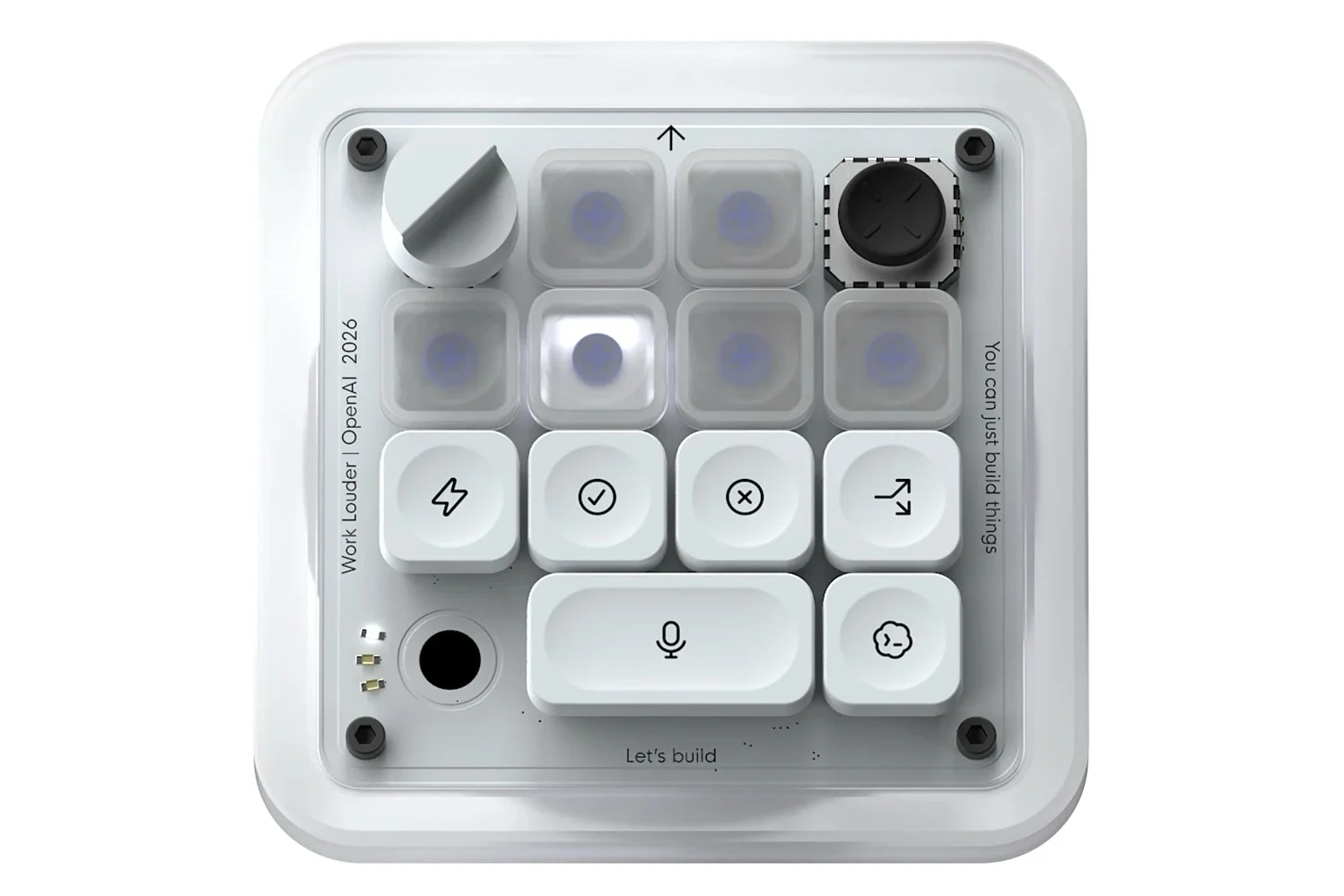
Even while courting third parties, OpenAI has not dropped its own hardware plans. Brockman hinted that its device will differ sharply from anything on the market. He framed it as a solution to an overlooked problem and a marker of AI’s broader direction.
Market rumours fill in some blanks. OpenAI’s first device may be a smart speaker paired with a semi-robotic camera. Some reports add that it could integrate World ID verification, the technology used by the iris-scanning Orb, for a distinctive experience.
This path is thorny, however. Apple has formally sued OpenAI, alleging that former Apple employees it recruited stole key hardware trade secrets. That case could slow OpenAI’s hardware timeline and cast a shadow over its future commercialisation.
The Battle for the AI Endpoint Has Begun
Brockman’s remarks mark a formal shift. The generative AI contest has moved from a cloud-model compute race to a fight over the hardware entry point.
OpenAI grasps the stakes clearly. Without controlling a hardware gateway, ChatGPT risks becoming an app that the OS layer, whether Apple Intelligence or Google’s Android AI, could sideline at any time. By releasing a multimodal API tuned for wearables, OpenAI hopes to build a third-party AI ecosystem spanning both Android and iOS.
The challenges remain formidable. Apple’s lawsuit threatens on one side, while Meta and Google’s hardware ecosystems press on the other. Internally, OpenAI must still tame the safety risks of agentic AI and revive a stalled IPO.
As the age of clicking and typing prepares to close, one prize awaits. Whoever makes AI the user’s eyes and ears fastest, and most safely, will hold the tech supremacy of the next decade.
Support Our Threat Intelligence
If you find our technology report and cybersecurity news helpful, consider supporting our work.
 Buy Me a Coffee
PayPal
Buy Me a Coffee
PayPal