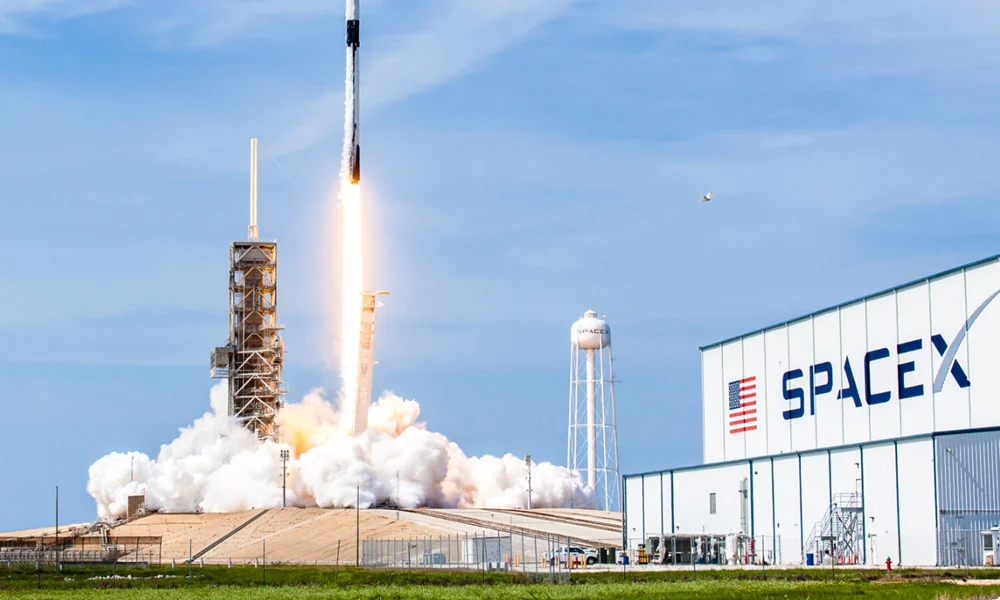
As previously anticipated by industry prognosticators, the accelerated Initial Public Offering (IPO) trajectory of SpaceX—Elon Musk’s hyper-conglomerate spanning aerospace engineering, artificial intelligence, and social media frameworks—has finally crystallized. The enterprise has formally executed a public filing of its Form S-1 registration statement with the United States Securities and Exchange Commission (SEC), ratifying its intention to list its common stock on the Nasdaq Global Select Market under the ticker symbol SPCX.
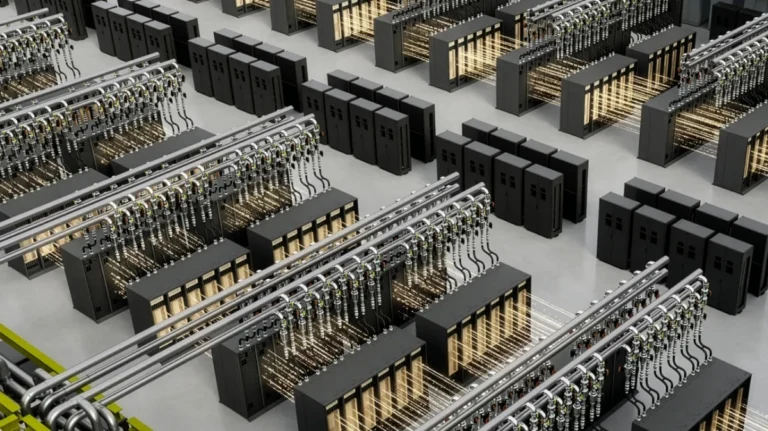
The declassification of this historically confidential financial dossier yields an unprecedented window into the operational realities of the Musk ecosystem. The prospectus comprehensively delineates the precise financial contractions within X’s advertising divisions, exposes a monumental $1.25 billion monthly artificial intelligence compute lease with Anthropic, and details an audacious orbital framework: a million-satellite constellation engineered to support “orbital data centers.”
Historically, the intricate capital flows and cross-entity dependencies mapping Musk’s various corporate frontiers remained heavily obfuscated; however, the S-1 documentation introduces several high-signal financial revelations:
- The Anthropic Compute Consortium: The prospectus discloses that under a recently ratified pact, Anthropic will proffer an extraordinary $1.25 billion monthly service disbursement to SpaceX in exchange for exclusive, dedicated access to the computational clusters hosted within xAI data centers. This agreement maintains an operational horizon extending through May 2029. Crucially, the text reveals significant structural elasticity; either counterparty retains the absolute administrative right to terminate the agreement without cause upon a rolling ninety-day notification envelope.
- The Fiscal Toll of X’s Advertising Attrition: Quantifying the severe friction between Musk’s leadership at X and the global advertising consensus, the S-1 formalizes the precise economic regression born from this adversarial stance. The text explicitly attributes a sharp $595 million contraction in X’s FY2024 advertising revenue stream directly to the “attrition of core enterprise advertising partners.”
Beyond backward-looking balance sheets, the registration text dedicates substantial narrative weight to SpaceX’s primary forward-looking doctrine: the industrial-scale deployment of hyper-scale artificial intelligence compute infrastructure natively within low Earth orbit.
- The Million-Satellite Architecture: The filing notes: “Our strategic deployment of distributed orbital infrastructure—encompassing real-time orbital AI processing fabrics—will inherently necessitate the stewardship of an unprecedentedly dense mega-constellation, scaling to an ultimate operational threshold of approximately one million active orbital nodes.”
- Systemic Regulatory Hurdles (Risk Factors): Inevitably, an engineering initiative of this unprecedented magnitude introduces extreme systemic volatility. Under its mandated risk disclosures, SpaceX freely acknowledges that the realization of the constellation is entirely contingent upon securing highly fragmented domestic and international electromagnetic spectrum allocations, orbital debris mitigation approvals, and complex space-traffic management certifications. The enterprise explicitly cautions that there can be no mathematical certainty that these regulatory clearances will manifest within an economically viable temporal horizon, if at all.
Further traversing the risk ledger, the S-1 confirms that SpaceX is currently navigating an accumulation of active regulatory investigations and administrative inquiries. Most prominent among these are severe legal allegations leveling scrutiny at its native AI architecture, Grok, for its alleged involvement in the algorithmic synthesis of non-consensual explicit imagery and the sexualized rendering of minors.
Additionally, the documentation establishes that SpaceX will deploy a dual-class equity structure. This structural safeguard ensures that post-listing, Elon Musk along with an insular cohort of Class B super-voting shareholders will maintain absolute, unassailable administrative and voting hegemony over the corporate trajectory.
While this initial S-1 iteration leaves absolute share pricing and prospective market capitalization matrices unpopulated, Wall Street consensus firmly anticipates that the offering will manifest as the most colossal initial public offering in the history of American capital markets.
Subjecting SpaceX to the absolute transparency mandates of public markets represents a profoundly dualistic maneuver for Elon Musk. Positively, accessing public capital markets provisions an inexhaustible financial treasury required to bankroll the orbital AI data center initiative and accelerate colonization timelines for Mars; this historic liquidity event possesses the distinct mathematical potential to propel Musk’s individual net worth to the unprecedented milestone of a trillionaire.
Conversely, this capital injection extracts a steep structural toll, systematically eroding the absolute administrative autonomy Musk historically weaponized to dynamically relocate human capital, compute assets, and financial resources fluidly across his private corporate matrix (Tesla, xAI, X, SpaceX). Moving forward, any such cross-entity transactions will face rigorous, hostile scrutiny from institutional Wall Street analysts and the SEC’s enforcement divisions. As visionary aerospace engineering collides with the relentless, cyclical profit optimization mandates of corporate earnings seasons, whether SpaceX can successfully sustain Musk’s sweeping technological rhapsodies will manifest as the definitive spectacle of the global financial markets throughout the twilight of 2026.
Support Our Threat Intelligence
If you find our technology report and cybersecurity news helpful, consider supporting our work.
 Buy Me a Coffee
PayPal
Buy Me a Coffee
PayPal