Recently, numerous Motorola smartphone users witnessed a subtle anomaly. Opening the Amazon application briefly triggers the web browser first. Afterward, the system redirects to the native Amazon interface. Because this transition occurs in the blink of an eye, many individuals might overlook it entirely. However, advanced users analyzed this behavior closely. They discovered that a built-in system application named Smart Feed orchestrates this unauthorized intercept. Consequently, evidence heavily suggests that this redirection stems from a deliberate corporate mechanism or insider manipulation.
Intercepting the Execution and Injecting Affiliate Schemes
The intercept process itself appears quite straightforward. First, Motorola continuously monitors whether a user initializes the Amazon application. If triggered, the operating system immediately halts the standard initialization routine. Instead, it forces the browser to resolve a specific domain, kira-abbound.com. This server appends a specialized affiliate tracking token to the request routing. Finally, it launches the target Amazon application to fulfill the user request. When consumers purchase merchandise through this sequence, Motorola secures a lucrative financial dividend. This dividend originates directly from Amazon or associated third-party merchants.
Furthermore, deep forensic auditing via Android Debug Bridge (ADB) exposes additional hidden telemetry. The affected devices routinely dispatch outbound network queries to devicenative.com. The corporate entity controlling this domain specializes primarily in mobile advertisement dissemination. Interestingly, this advertising group explicitly lists Motorola as a primary strategic partner.
A Sophisticated Infrastructure Breach or an Inside Job?
Currently, a profound obscurity veils the true origin of this behavioral anomaly. Analysts wonder whether Motorola intentionally engineered this intercept or if a threat actor compromised the system. Intriguingly, domain registration logs show that kira-abbound.com was registered on May 22, 2026. This timeline indicates the asset has been active for merely three days. Moreover, the domain presently points to a fashion influencer profile, @kirasfashionfinds. Yet, the specific affiliate code utilized by the tracking script is sramz-kff-008-20. This token diverges completely from the legitimate codes used by that specific influencer.
Therefore, several suspicious elements surface upon closer examination. It remains highly improbable that Motorola would deploy a three-day-old domain for legitimate corporate tracking. Similarly, the enterprise would not willingly route valuable traffic to an unrelated third party. Thus, pointing the domain to an influencer likely serves as a calculated artifice. This deception effectively cloaks the true ownership of the affiliate revenue.
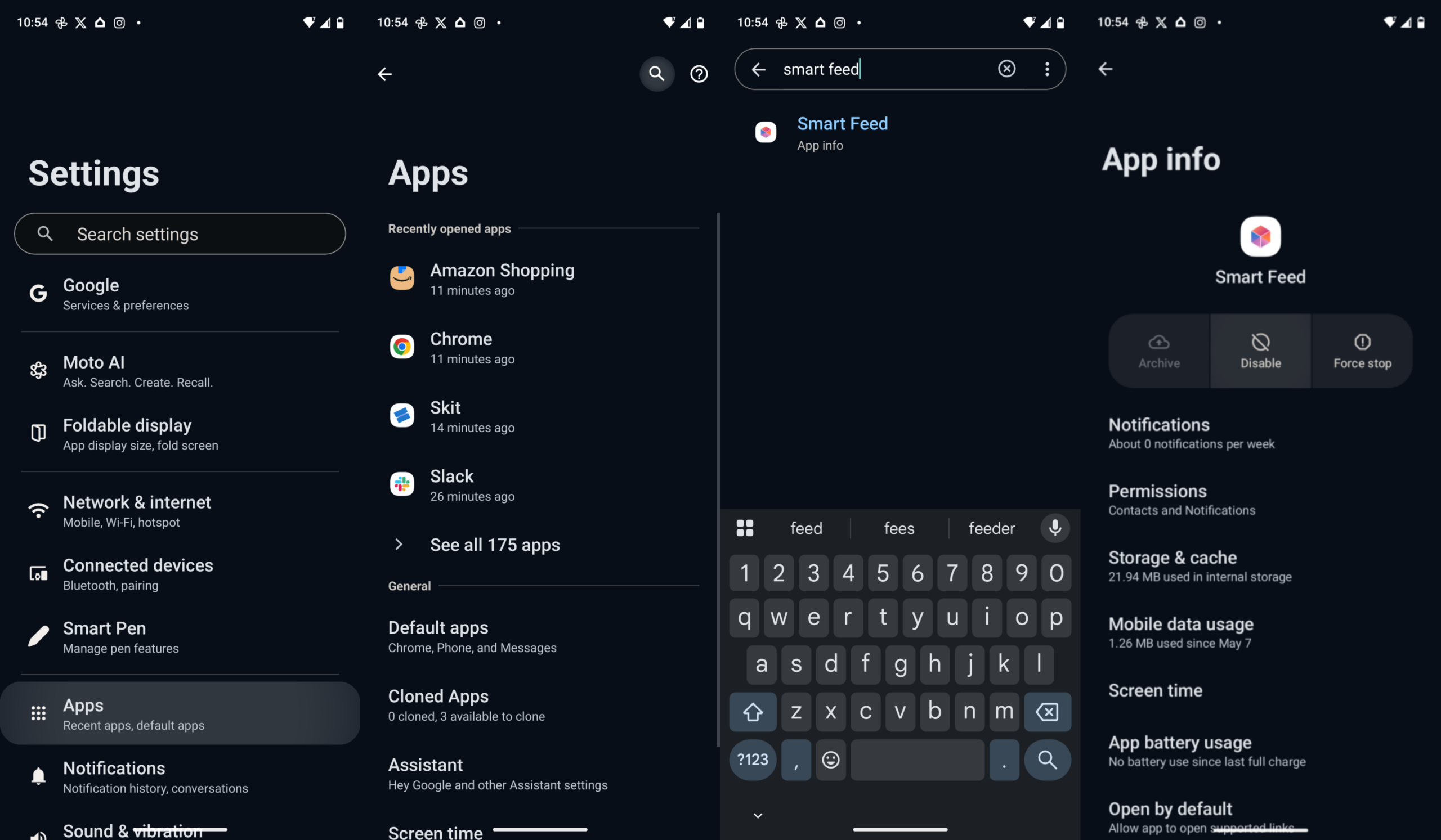
Consequently, industry observers suspect internal systemic manipulation rather than an external perimeter breach. A rogue insider likely altered the Smart Feed software package to harvest illicit financial gains using corporate privileges. Fortunately, users can resolve this security concern immediately. They can simply navigate to Settings and select the Applications menu. From there, searching for Smart Feed allows individuals to disable the component completely. Once deactivated, the device executes standard applications without any further unauthorized interception.
Support Our Threat Intelligence
If you find our technology report and cybersecurity news helpful, consider supporting our work.
 Buy Me a Coffee
PayPal
Buy Me a Coffee
PayPal