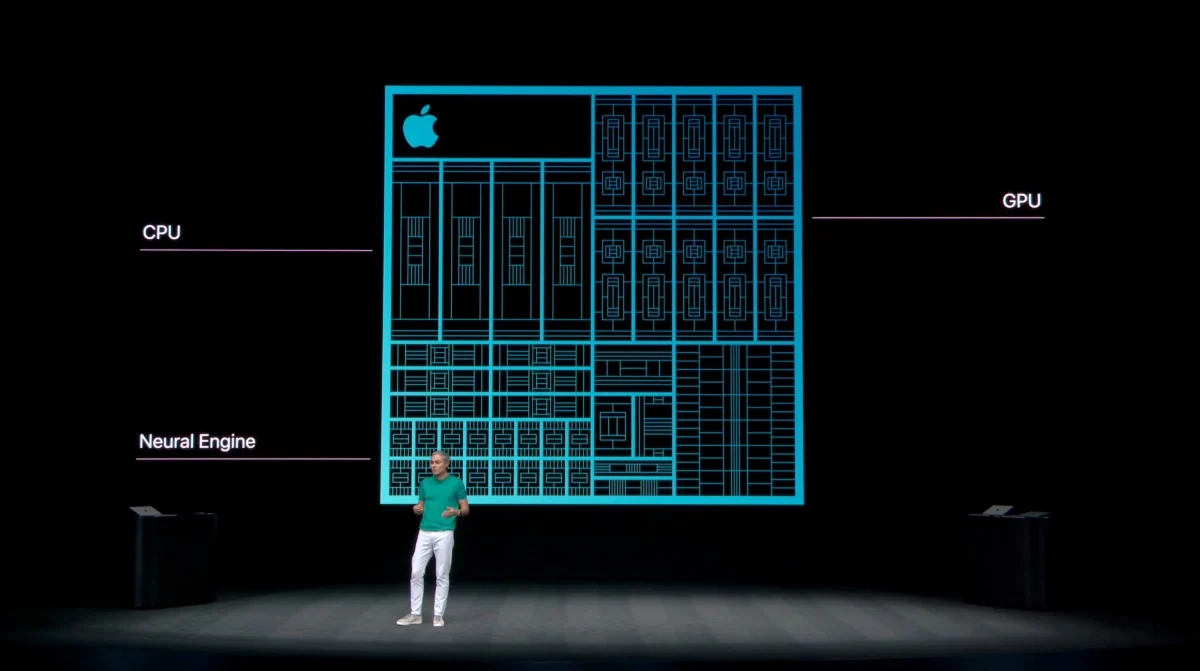
Bloomberg journalist Mark Gurman recently disclosed fascinating details in his latest “Power On” newsletter. He revealed that Apple has drastically restructured its Apple silicon roadmap for the coming years. To elevate its hardware neural network computing capabilities (NPU) rapidly, Apple will execute an unprecedented maneuver. Following the launch of the foundational M6 chip this autumn, they will effectively skip the advanced M6 Pro, M6 Max, and M6 Ultra variants. Instead, Apple will accelerate directly into the brand-new M7 generation. Furthermore, two redesigned Apple Pencils will debut alongside the new iPad Pro early next year. These styluses will introduce significant structural changes to comply with stringent European Union regulations.
The Invisible Legacy of Apple Car: Paving the Way for AGI
The public generally views “Project Titan,” Apple’s autonomous electric vehicle initiative, as a colossal failure. They perceive it as a $10 billion investment that yielded only empty patents before its cancellation in 2024. However, Mark Gurman astutely points out a different narrative. This decade-long endeavor actually bequeathed Apple its most crucial technological legacy. It provided the foundational technology for its proprietary silicon and the Neural Engine.
Years ago, achieving Level 5 autonomous driving for the Apple Car demanded extreme computational power. Consequently, the Apple silicon team was forced to develop custom chips exceptionally early. These processors needed to handle massive visual and logical AI workloads instantaneously. Although the car never materialized, these research fruits were extracted in 2017. They were initially transplanted into the A11 Bionic chip for the iPhone X, powering Face ID and Animoji. By 2020, this technology fully permeated the Mac product line alongside the Apple Silicon transition. Today, it serves as the most potent on-device foundation driving the Apple Intelligence ecosystem forward.
A Massive Strategy Shuffle: Accelerating to the M7 Family
Apple is aggressively compressing its chip iteration cycles. They aim to seamlessly align their hardware prowess with mainstream generative large language models. Therefore, the Apple silicon roadmap is undergoing a significant transformation.
- The M6 Generation Curtailed: Apple will still release the foundational M6 chip for entry-level Macs this autumn. However, they will completely abandon the development of the M6 Pro, M6 Max, and M6 Ultra in the high-end sector.
- M7 Tape-out Progress Surges: A mere six months after the M6 chip completed its tape-out validation, Apple announced the commencement of M7 tape-out operations.
The Projected M7 Family Timeline
The anticipated schedule for the M7 series looks remarkably ambitious. In the first half of 2027, Apple will announce the foundational M7 chip. By late 2027, they will introduce the M7 Pro and M7 Max. Finally, in 2028, they will unveil the ultimate performance tier: the M7 Ultra.
Rumors suggest the M7 Ultra will deliver an epic leap in AI performance. Its design targets specifically rival data-center-grade AI accelerators like the NVIDIA Blackwell. This chip will eventually serve as the backbone for Apple’s next-generation AI servers. While engineers prepare to deploy the M5 Ultra servers (internally codenamed “J246”), they are already laying the groundwork for the 2029 next-generation servers powered by the M7 Ultra.
The M7 Ultra is projected to support a staggering 1.5 TB of unified memory. This capacity doubles the planned allocation for the M5 Ultra. However, final specifications remain subject to global memory shortages and escalating costs. Furthermore, Apple has concurrently initiated research on the distant M8 chip family. These high-end internal projects, codenamed “Soko” and “Cardinal,” are expected to debut in 2028. They will leverage TSMC’s advanced 1.4nm manufacturing process.
Next-Generation Apple Pencils: Yielding to EU Battery Regulations?
Beyond the core processors, the iPad ecosystem will also undergo a generational update in early 2027. Coinciding with the redesigned entry-level MacBook Pro and the new iPad Pro, Apple is secretly preparing two new digital styluses.
- Codename B582: This model updates the entry-level, USB-C-charging Apple Pencil introduced a few years ago.
- Codename B632: This represents a functional upgrade for the premium Apple Pencil Pro that debuted with the M4 iPad Pro in 2024.
Notably, the repair industry has historically deemed the current Apple Pencils virtually unrepairable. They are brimming with dense adhesives and feature irreplaceable micro-batteries. Sources reveal that Apple is redesigning the internal structures of these two new styluses. This redesign aims to comply fully with upcoming, stringent EU regulations mandating easily replaceable batteries in consumer electronics. Consequently, Apple will likely introduce a new detachable or easily replaceable battery system. This represents a significant challenge to Apple’s traditionally enclosed industrial design philosophy.
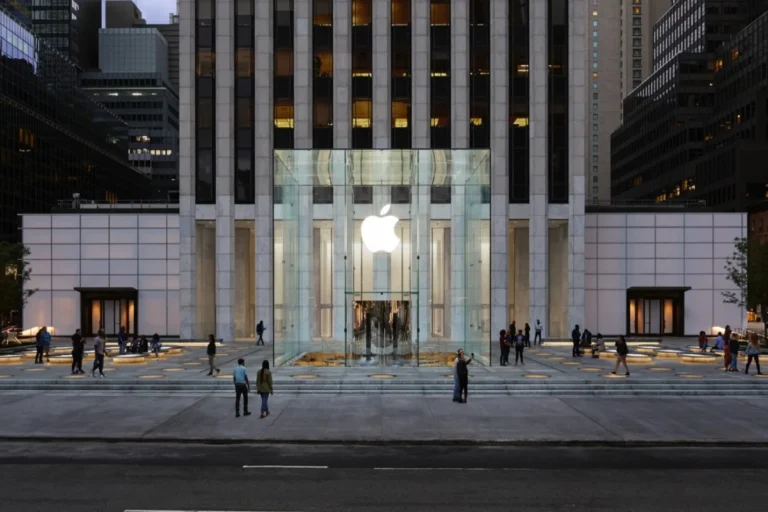
Apple Store Checkout Upgrades: The iPhone 16 Replaces Card Readers
In the retail channel, Apple leverages hardware upgrades to resolve a persistent pain point. Over the past few years, Apple Store employees gradually replaced custom Isaac terminals with iPhone 14 devices supporting Tap-to-Pay. However, the older chip’s NFC capabilities were overly sensitive. When encountering thick, pure metal credit cards like the American Express Platinum or Chase Sapphire Reserve, induction frequently failed. Consequently, employees still needed to carry cumbersome, external Bluetooth card readers.
Internal Apple testing revealed that the new iPhone 16 exhibits significant improvements. Its NFC induction power and metal interference isolation are vastly superior. It can read various metal cards directly, flawlessly, and fluidly. Therefore, Apple Stores globally will undergo a massive transition in the coming weeks. They will adopt the iPhone 16 as the primary checkout tool, officially retiring external card reading terminals to history.
Support Our Threat Intelligence
If you find our technology report and cybersecurity news helpful, consider supporting our work.
 Buy Me a Coffee
PayPal
Buy Me a Coffee
PayPal