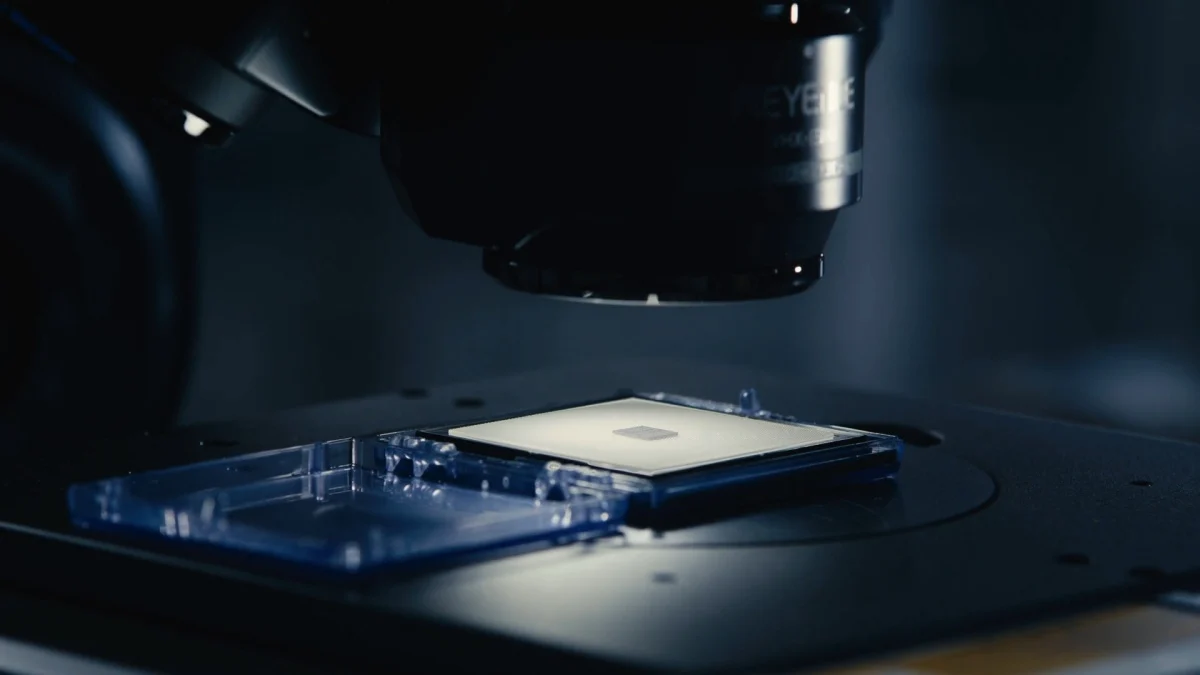
In late June, the Federal Trade Commission (FTC) officially approved Elon Musk’s acquisition of Mesh Optical Technologies. This discreet Los Angeles startup is merely a year old. Three former Starlink optical engineers originally founded the company. You can read more about how the FTC gives Musk the OK to acquire SpaceX alumni startup Mesh. Consequently, this strategic transaction represents more than just a talent reunion. Musk is actively laying the groundwork for his xAI supercomputing centers. Furthermore, he is preparing for “Starmind,” a newly revealed megaconstellation of a million AI satellites. Ultimately, he aims to shatter the existing supply chain monopoly within the optical module sector.
Engineers Target Optical Communication Gaps
Founders Travis Brashears, Cameron Ramos, and Serena Grown-Haeberli previously held crucial roles at Starlink. They successfully developed systems ensuring thousands of satellites maintained high-speed laser connections in orbit. However, evaluating optical transceivers for next-generation computing satellites revealed significant concerns. Commercially available products exhibited serious shortcomings in performance, power consumption, and supply chain reliability. Specifically, rigorous AI training creates immense lateral data transfer challenges for GPUs. Therefore, the demand for sophisticated optical communication modules is currently experiencing exponential growth.
These three engineers astutely recognized a critical vulnerability. Global optical module production capacity remains heavily concentrated in China. Industry giants currently control over half the global market share. Meanwhile, geopolitical tensions are escalating rapidly. Deep reliance on a singular regional supply chain is unacceptable for defense-affiliated contractors like SpaceX. Consequently, they departed SpaceX in 2025 to establish Mesh. They dedicated themselves to forging a fully automated optical module production line right on American soil.
Rapid Funding and a Strategic Buyout
Mesh officially exited stealth mode in February of this year. Simultaneously, they announced a massive $50 million Series A funding round. The company proudly unveiled its flagship product, the Alpha C1. This innovative optical transceiver boasts an incredible data transmission rate of 1.6Tbps. Its primary brilliance lies in an innovative, subtractive design philosophy. The architecture entirely eliminates traditional, high-power consumption components. Remarkably, it reduces overall GPU cluster power usage by 3% to 5% while flawlessly maintaining signal integrity.
Massive GPU training clusters routinely require tens of millions of dollars in electricity. Thus, this efficiency translates into incredibly substantial operational profit margins. Furthermore, Mesh aggressively champions its fully automated, “Made in America” production methodology. This perfectly addresses the urgent American necessity for secure, domestic AI infrastructure alternatives. However, their product was just approaching large-scale commercial manufacturing. Elon Musk decisively intervened and purchased the startup founded by his former employees, cashing in this strategic ace prematurely.
Completing the Ultimate Computing Puzzle
Musk’s motivation for acquiring Mesh perfectly aligns with his recent strategic maneuvers. First, xAI is aggressively constructing colossal AI training clusters across locations like Memphis. These ground-based facilities utilize tens of thousands of advanced GPUs. Communication speed and energy loss become absolute system limits as clusters reach massive scales. Obviously, Mesh’s low-power optical interconnect technology is the definitive key to resolving these financial and performance bottlenecks. Second, Musk officially unveiled an unprecedented project named “Starmind” in late June.
This initiative aims to deploy a megaconstellation of dedicated computing satellites in low Earth orbit. He intends to utilize nearly constant solar energy in space. Consequently, this solves the severe electricity and thermal limits plaguing terrestrial data centers. These massive, orbitally distributed computing nodes absolutely require ultra-high-bandwidth optical links for seamless interconnection.
The Battle for Optical Communication Talent
Musk’s swift acquisition of Mesh ostensibly resolves hardware anxieties surrounding xAI and Starmind. On a deeper level, however, it epitomizes the fiercely intensifying battle for optical communication talent. AI model parameter scales are expanding relentlessly. Consequently, computing bottlenecks are gradually shifting away from individual GPU performance. Network data transmission bandwidth is now the primary constraint. Major tech giants continue expanding their optical interconnect teams. These actions definitively prove that optical communication is the next crucial AI battleground.
Nevertheless, international optical module manufacturers maintain a seemingly unshakeable advantage. They excel remarkably in cost control and large-scale precision manufacturing. Musk is successfully reintegrating talent possessing elite aerospace and optical expertise. Moreover, this acquisition represents a vital attempt by American tech giants to rebuild domestic supply chains. They are utilizing high automation and novel packaging architectures to achieve this goal. SpaceX provides orbital communication resources. Starmind and xAI offer comprehensive computing support. Finally, Mesh delivers cutting-edge optical interconnect technology. Thus, Musk’s grand puzzle of space-based computing is rapidly taking shape.
Support Our Threat Intelligence
If you find our technology report and cybersecurity news helpful, consider supporting our work.
 Buy Me a Coffee
PayPal
Buy Me a Coffee
PayPal