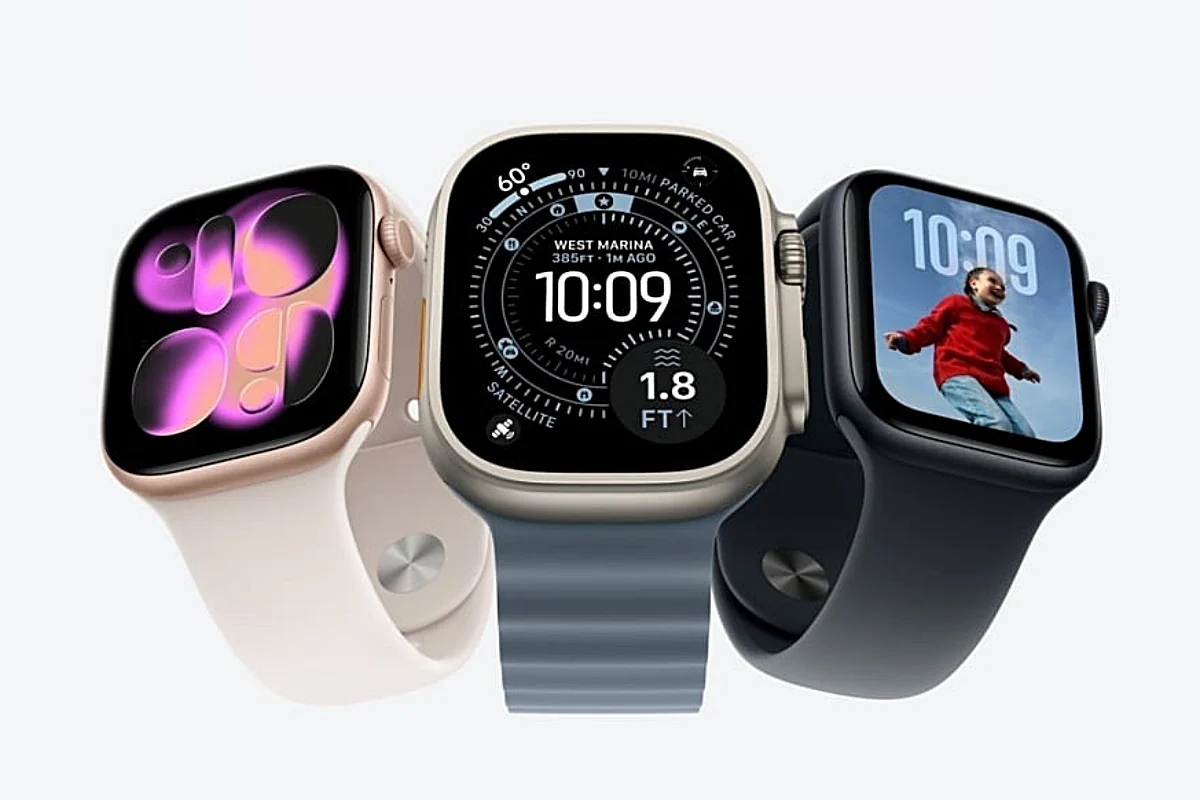
If you harbor expectations that this year’s Apple Watch will introduce revolutionary transformations, it may be prudent to temper those anticipations. According to the latest intelligence from Bloomberg, Apple appears disinclined to execute significant alterations for the forthcoming Apple Watch Series 12 and watchOS 27, slated for an autumnal release. Aside from customary, marginal performance enhancements and the inclusion of at least one novel, exclusive watch face, the overarching magnitude of both hardware and software upgrades is projected to be the most incremental in the product’s lineage.
Of greater consequence is the realization that, due to innate hardware constraints, the highly anticipated Apple Intelligence suite of AI functionalities will likely struggle to manifest its full potential on this year’s smartwatch iteration.
As the hardware evolution of smartwatches asymptotically approaches its zenith, Apple has seemingly elected a strategy of stabilization, reallocating its research and development capital toward profound innovations in future generations.
Synthesizing previous industry murmurs, market consensus initially anticipated that while the hardware of the Series 12 might remain static, the software ecosystem would, at minimum, receive a substantial overhaul. However, recent dispatches suggest a far more conservative trajectory:
- Anticipated Modifications: The report explicitly corroborates that the new models will feature at least one bespoke watch face, accompanied by routine computational enhancements, bug resolutions, and security patch deployments.
- Hardware Stagnation: Regarding the physical architecture, barring microscopic adjustments to internal componentry, both the exterior aesthetics and the core sensor array are expected to remain indistinguishable from the current Apple Watch Series 11.
While Apple Intelligence was undeniably the cynosure of the WWDC 2026 developer conference, the Apple Watch may regrettably find itself relegated to the periphery of this AI renaissance.
- Memory Architecture Constraints: Current projections indicate that the internal memory capacity of the Apple Watch ranges merely between 1 GB and 1.5 GB. This allocation is unequivocally inadequate for the colossal on-device computational demands of generative AI models, effectively precluding the independent execution of Apple Intelligence on the wearable.
- Prospective Contingencies: Although incapable of autonomous generative processes, the smartwatch is not entirely insulated from the AI ecosystem. Future iterations of the Apple Watch may function as a “display terminal,” rendering prompts or synthetic results processed downstream by an iPhone’s Apple Intelligence architecture. However, recent reporting remains silent on whether this symbiotic capability will debut concurrently with the imminent release of watchOS 27.
The revelation that the Apple Watch Series 12 will feature only iterative refinements is hardly astonishing. Viewed through the prism of product lifecycles, Apple’s wearable portfolio currently resides in a phase of “mature stabilization.” Absent breakthrough advancements in biometric telemetry—such as blood oxygen or electrocardiogram sensors—and without quantum leaps in battery technology, the imposition of a radical hardware redesign frequently bears risks that eclipse potential dividends. Furthermore, corollary reports suggest that Apple’s hardware revisions for the Apple Watch throughout 2026 will be exceedingly constrained, if not entirely absent.
Prognosticators posit that Apple is clandestinely architecting a disruptive, fundamentally redesigned “All-glass” timepiece, potentially poised for a 2028 inauguration. Should this rumor materialize, it stands to reason that both the Apple Watch Series 12 and the subsequent Series 13 will serve as intermediary “bridge” products during this transitional epoch.
For patrons currently adorning an Apple Watch Series 9 or 10, this year presents an opportune juncture to comfortably bypass the upgrade cycle.
Support Our Threat Intelligence
If you find our technology report and cybersecurity news helpful, consider supporting our work.
 Buy Me a Coffee
PayPal
Buy Me a Coffee
PayPal