The PlayStation 5 has once again been transmuted into a fully functional personal computer, though such an experimental endeavor is reserved exclusively for those possessing legacy firmware and steadfast resolve. Developer Andy Nguyen, having previously demonstrated the execution of a comprehensive Linux environment on Sony’s flagship hardware, has formally disseminated the installation methodology and procedural steps required to boot an open-source software ecosystem directly upon the PS5.
The exploit necessitates a disc-based PlayStation 5 iteration running firmware versions 3.00 through 4.51. Notably, support for M.2 NVMe storage is currently confined to the 4.xx firmware branch. While various techniques for firmware restoration to compatible versions are circulating within the community, these maneuvers are often inconsistent and highly dependent upon the specific revision of the console.
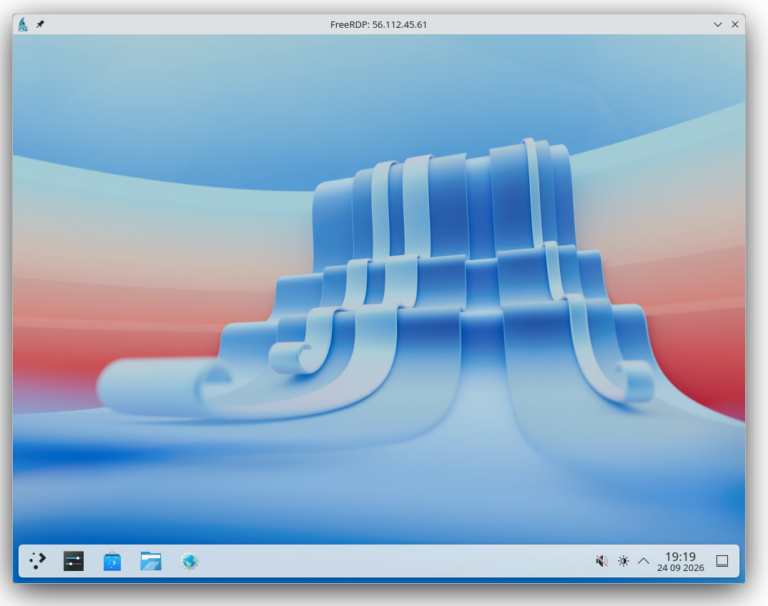
Upon successful application of the jailbreak, payload deployment, and subsequent reboot, the user is greeted by a robust installation of Ubuntu 26.04 Resolute Raccoon, underpinned by the Linux 7 kernel. Far from a mere conceptual demonstration, the environment manifests as a remarkably stable workspace. Nguyen has integrated granular controls for dedicated video memory allocation, fan speed regulation, and a high-performance mode toggle. Adjusting these parameters remains a hallmark of the enthusiast experience, necessitating direct interaction with the terminal or configuration files.
Constraints nevertheless persist. As driver development remains in its infancy, wireless connectivity may require a manual reset of the WLAN adapter. Furthermore, native DualSense controller support is currently absent via the integrated Bluetooth module, necessitating the use of an external adapter. Visual output is presently capped at a 60 Hz refresh rate across 1080p, 1440p, and 4K resolutions, though a future update to 120 Hz remains a distinct possibility.
The most compelling aspect of this installation lies in its “soft-modding” nature. Should the user reboot the device from within the Linux desktop, the console will not return to the Linux environment without a re-application of the jailbreak. Consequently, the core PlayStation 5 operating system remains pristine; after a standard power cycle, the console reverts to its original identity as a conventional Sony gaming system, entirely devoid of permanent alterations to its factory environment.
Support Our Threat Intelligence
If you find our technology report and cybersecurity news helpful, consider supporting our work.
 Buy Me a Coffee
PayPal
Buy Me a Coffee
PayPal